

Productos principales
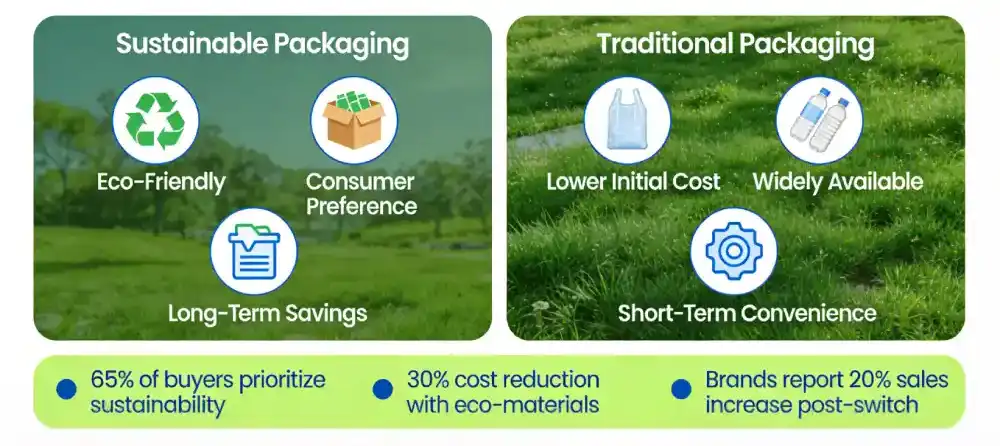
Por qué esta comparación todavía confunde a los compradores (y les cuesta dinero)
Después de más de 10 años gestionando líneas de producción de láminas de PET y PVC, he notado algo interesante:
Muchos compradores pensar ellos entienden la diferencia entre Lámina de PET y lámina de PVC, sin embargo, todavía:
Así que déjame ser muy claro desde el principio:
PET versus PVC no es un debate técnico.
Es una decisión de compra con consecuencias regulatorias, de costos y de marca.
En este artículo, te explicaré lo que realmente importa al elegir entre Lámina de PET y lámina de PVC para termoformado, Residencia en Producción real en fábrica, rendimiento de formación y experiencia en exportación. – no teoría.
Desde el punto de vista de un director de producción, estabilidad de la temperatura de formación Los compradores a menudo lo subestiman.
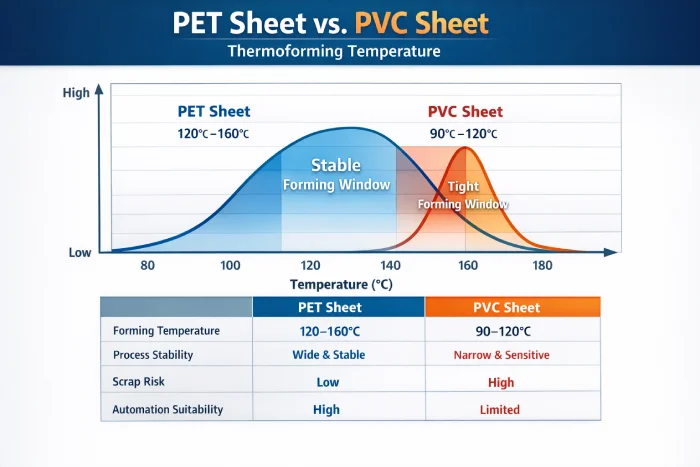
En nuestra fábrica, la lámina de PET se desempeña especialmente bien en:
Información clave para el comprador:
La ventana de formación más amplia del PET significa menor tasa de desperdicio, especialmente cuando las condiciones de la máquina fluctúan.
El PVC se forma fácilmente a temperaturas más bajas, por lo que históricamente fue popular para los envases tipo blíster.
Sin embargo, en producción real:
Información clave para el comprador:
El PVC puede parecer “fácil de formar”, pero requiere control preciso de la temperatura, aumentando la dependencia del operador.
| Aspecto | Hoja de mascotas | CLORURO DE POLIVINILO |
|---|---|---|
| Temperatura de formación | Más alto | Más bajo |
| Estabilidad del proceso | Excelente | Medio |
| Riesgo de chatarra | Más bajo | Más alto |
| Adecuado para automatización | Sí | Limitado |
Como fabricante que exporta a UE, EE.UU., Japón y Oriente Medio, esta es la sección que los compradores deben leer dos veces.
La lámina de PET es naturalmente:
En nuestra producción diaria, lámina de PET de calidad alimentaria se utiliza para:
Información importante sobre adquisiciones:
El uso de PET reduce carga de documentación durante el despacho de aduanas y las auditorías de los minoristas.
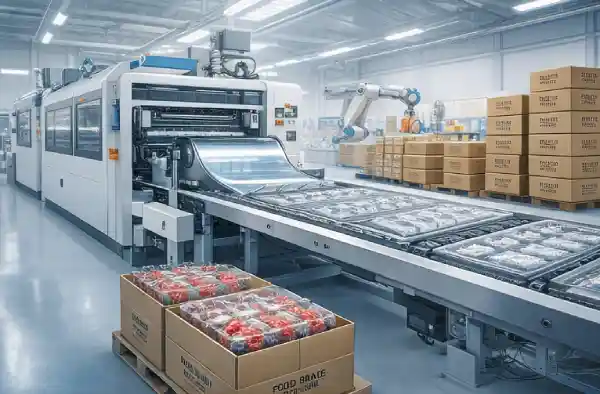
La lámina de PVC técnicamente se puede utilizar para envasar alimentos, pero con condiciones:
En la práctica vemos:
Riesgo a nivel de marca:
Incluso cuando está permitido legalmente, el PVC señala “baja sostenibilidad” a los consumidores.
| Factor | Hoja de mascotas | CLORURO DE POLIVINILO |
|---|---|---|
| Aprobación de contacto con alimentos | Excelente | Restringido |
| Olor/sabor | Neutral | Posible |
| Aceptación minorista | Alto | Declinante |
| Riesgo regulatorio a largo plazo | Bajo | Alto |
Muchos compradores se centran en precio por kilogramo. Eso es un error.
Pero el coste del embalaje no es sólo la materia prima.
A partir de datos de fábrica y comentarios de los clientes:
Durante un año, muchos clientes encontraron:
Los envases de PET cuestan igual o incluso menos que los de PVC, una vez contados los costos totales.
PET es:
En Europa y América del Norte, los envases de PET se alinean con:
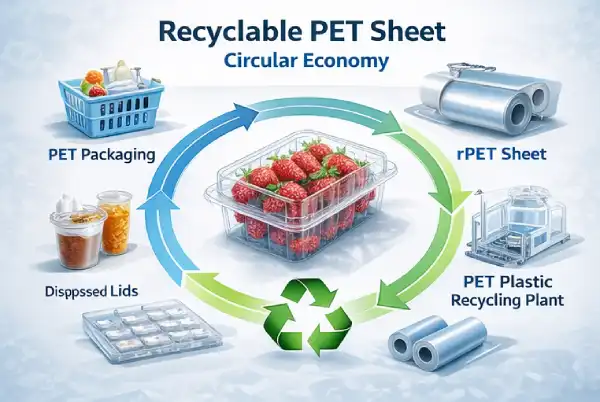
Caras de reciclaje de PVC:
Muchas plantas de reciclaje rechazar activamente el PVC.
| Aspecto | Hoja de mascotas | CLORURO DE POLIVINILO |
|---|---|---|
| Reciclabalidad | Excelente | Pobre |
| uso de material r | Sí | Limitado |
| Puntuación de sostenibilidad de la marca | Alto | Bajo |
Basado en 10 años de experiencia real en producción y exportación, Hoja de mascotas es la mejor opción cuando:
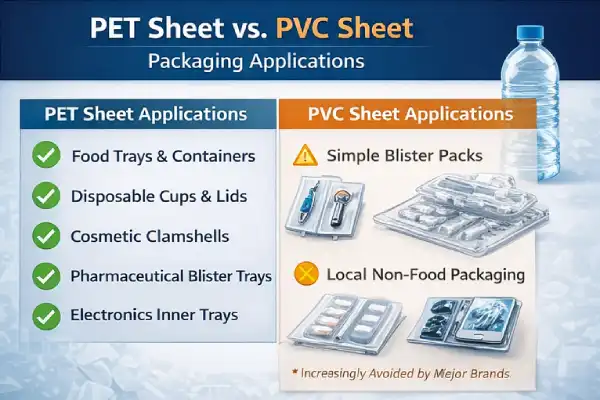
Aplicaciones típicas de PET:
Incluso entonces, muchos compradores se están alejando.
| Factor de decisión | Hoja de mascotas | CLORURO DE POLIVINILO |
|---|---|---|
| Seguridad alimentaria | ⭐⭐⭐⭐⭐ | ⭐⭐ |
| Sostenibilidad | ⭐⭐⭐⭐⭐ | ⭐ |
| Estabilidad de formación | ⭐⭐⭐⭐ | ⭐⭐⭐ |
| Riesgo de cumplimiento | Bajo | Alto |
| Valor a largo plazo | Alto | Declinante |
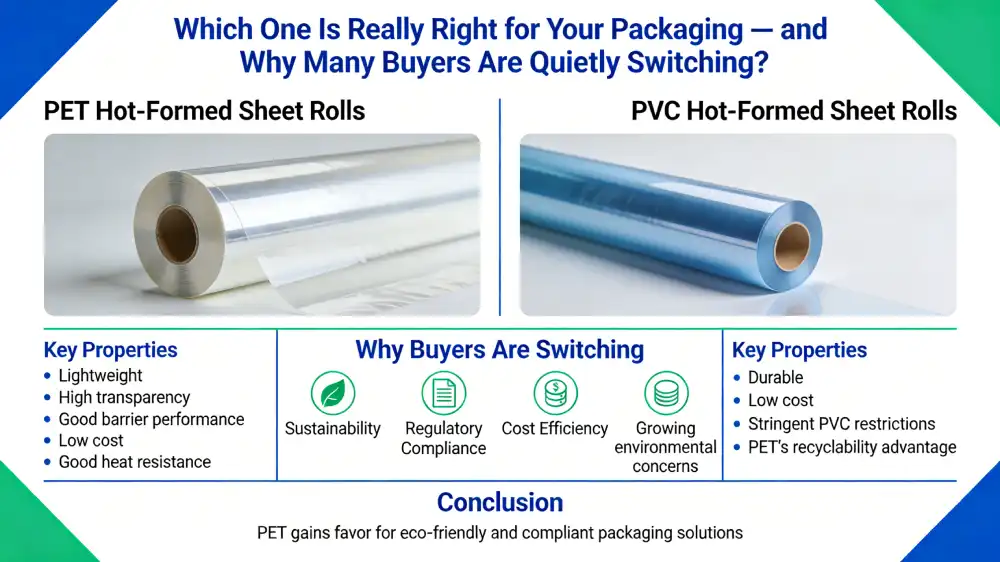
Después de producir miles de toneladas de láminas termoformadas de PET y PVC, mi conclusión honesta es:
El PVC se está convirtiendo en un material de transición.
El PET es la solución a largo plazo.
Si su marca, minorista o valores de mercado seguridad alimentaria, sostenibilidad y estabilidad regulatoria, la lámina de PET ya no es la “opción premium”, es la elección predeterminada.
La lámina de PET ofrece una temperatura de formación más alta, mejor seguridad alimentaria y reciclabilidad, mientras que la lámina de PVC es más barata pero tiene una ventana de formación estrecha y riesgos de cumplimiento.
Se recomienda la lámina de PET para envases que entran en contacto con alimentos debido al cumplimiento de la FDA, la UE y la LFGB y a que no contiene plastificantes nocivos.
Las láminas de PET normalmente se forman entre 120 y 160 °C, mientras que las láminas de PVC se forman entre 90 y 120 °C; el PET ofrece una ventana de formación más estable.
Sí, la lámina de PET es ampliamente reciclable y compatible con los bucles de rPET, mientras que el reciclaje de PVC es limitado y menos aceptado.
La lámina de PET es ideal para bandejas de alimentos, vasos desechables, recipientes para cosméticos, ampollas farmacéuticas y bandejas interiores para dispositivos electrónicos.
Si bien las láminas de PVC pueden tener un costo de materia prima más bajo, el PET a menudo ahorra costos totales al reducir los desechos, los problemas de cumplimiento y las ineficiencias logísticas.
Los compradores cambian al PET por motivos de seguridad alimentaria, sostenibilidad, cumplimiento normativo y un rendimiento de termoformado más consistente.
Sí, las láminas de PET son adecuadas para el termoformado automatizado de alta velocidad, los moldes de embutición profunda y la producción de cavidades múltiples.
El PET es totalmente reciclable, respalda los ciclos de la economía circular y se alinea con los requisitos ESG y EPR, a diferencia del PVC.
El PVC se puede utilizar para proyectos de embalaje locales sencillos, no alimentarios, donde el costo es crítico y el cumplimiento normativo es menos estricto.
Información de contacto
No.32 Lubin Rd, Lucky Industrial Zone, Shanghai, Shanghai, China Teléfono:+8613818585204 Correo electrónico:[email protected]Síganos


Escanee para conectarse con nuestras ventas




Haz clic para chatear en WhatsApp
Productos